
Marginalia
What Doreen Hinchliffe discovers in the margins are the things we’ve neglected or forgotten. She finds her subjects in edgelands, in shadows, and brings them into the light with a painter’s precision for detail and vibrancy. As with previous collections, her delight in form is evident, and she shares the page with literary ghosts, such as Dickinson and Auden, but also nods to contemporaries, such as Terrance Hayes. The highlight of this assured book is the stunning sequence ‘Another Country’, a heroic crown of sonnets that mourns a lost land from the past. To quote Hinchliffe, these places of memory reside ‘in the margins, where the meanings are’.
Tamar Yoseloff
In Doreen Hinchliffe’s Marginalia, to my delight, I discovered the word ‘opalesce’ has a relationship with both ‘elapse’, ‘eclipsed’, ‘escape’ and ‘scope’ in a poem that nods to Terrance Hayes – I discovered riffs on Utrillo, Hamlet and The Erl-King, but also found Woodbines, anoraks, Wimpy and ‘a wad of orange Thermogene’ – in a time when art itself can seem marginalised, or used only as a quick gateway to another social conversation, these are poems first and foremost – ‘nothing’s beyond her scope…’
Matthew Caley
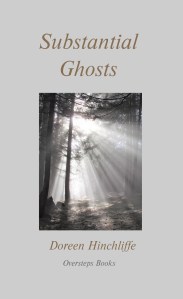
Substantial Ghosts
‘Doreen Hinchliffe’s second collection builds on the strengths of her first, Dark Italics. The past is again the presiding subject, and although there is a feel of elegy and commemoration, she has pulled off that almost impossible task – to write in traditional forms, but to keep her tone airy and conversational. Her ghosts are all too human.’
Tamar Yoseloff
‘Doreen Hinchliffe practises ‘the art of getting lost’ – in landscape, from a surreal upside-down snow globe to a very real Ilkley Moor; and in memory, from tender evocations of grandparents to a delightful description of the Yorkshire shops of her youth (oh that underwear shop!). Hidden pasts are revealed: D-Day nightmares, an ancestor’s hard life at a mill that’s now a tourist attraction, and the London Underground’s ghost stations. Vivid, precise imagery and her skilful use of rhyme and rhythm draw the reader into Hinchliffe’s world, where she calls on us to celebrate and regret the past, and wonder at the present.’
Fiona Moore
‘These poems draw the reader in with vibrant, haunting imagery, an engaging lyric formality, and tender and imaginative explorations of ghosts past and present. From myth to motor bikes, Hinchliffe explores our responses to culture, environment, life and loss, and, in vividly-remembered childhood stories, to the continuing presence of loved ones gone before.’
Anne Stewart
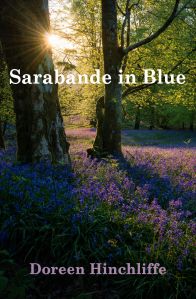
Sarabande in Blue
This novel has its origins in just seven words, a single sentence that I heard many times throughout my teenage years and which I found incredibly moving. Whenever my grandmother recounted the true story involving her life as a young woman in Salts Mill and her friendship with the person who later became my godmother, these were the words that always ended her account and were unfailingly delivered with great feeling.
The ghosts that lie behind the seven words have haunted me down the years and I have always wanted to tell their powerful story. As a poet, I made various attempts to capture what it was that made them so powerful but slowly came to realise that nothing short of a novel would ever be able do them justice.
Now that grandma’s story has finally made it into print, I can only hope that you will be gripped and moved by it, just as I was all those years ago. If you are, perhaps you will be kind enough to leave a review on Amazon or, even better, recommend it to your friends and to any reading groups you may belong to.

Dark Italics
Dark Italics is a collection in which the poet often inhabits different voices to reflect diverse experience. Sometimes humorous, sometimes filled with pathos, these voices are many and varied. A single voice dominates the latter part of the book – that of the poet as a child, through whose eyes we are introduced to life in the Yorkshire pub run by her parents and the striking array of regular customers who made it their second home.
‘This is a rich and varied collection drawing together the tragic, humorous and empathic, and packed with vivid and varied voices, historic, literary and personal. Hinchliffe is a poet truly in her element with rhyme and metre, a formal virtuoso who marries form and content with consummate ease and beauty.’
Jacqueline Saphra
‘In Dark Italics, Doreen Hinchliffe often turns to the past, asking the question: how can you preserve memory? Sometimes she is the child, looking to adults to make sense of the world. Sometimes she inhabits other voices, always with ease and grace, like the best ventriloquist. She has an exceptional skill with traditional forms, which feels wholly natural and contemporary. This is an assured debut from a poet who deserves to be read and reread.’
Tamar Yoseloff
 Doreen Hinchliffe